
Why a precise assessment is essential
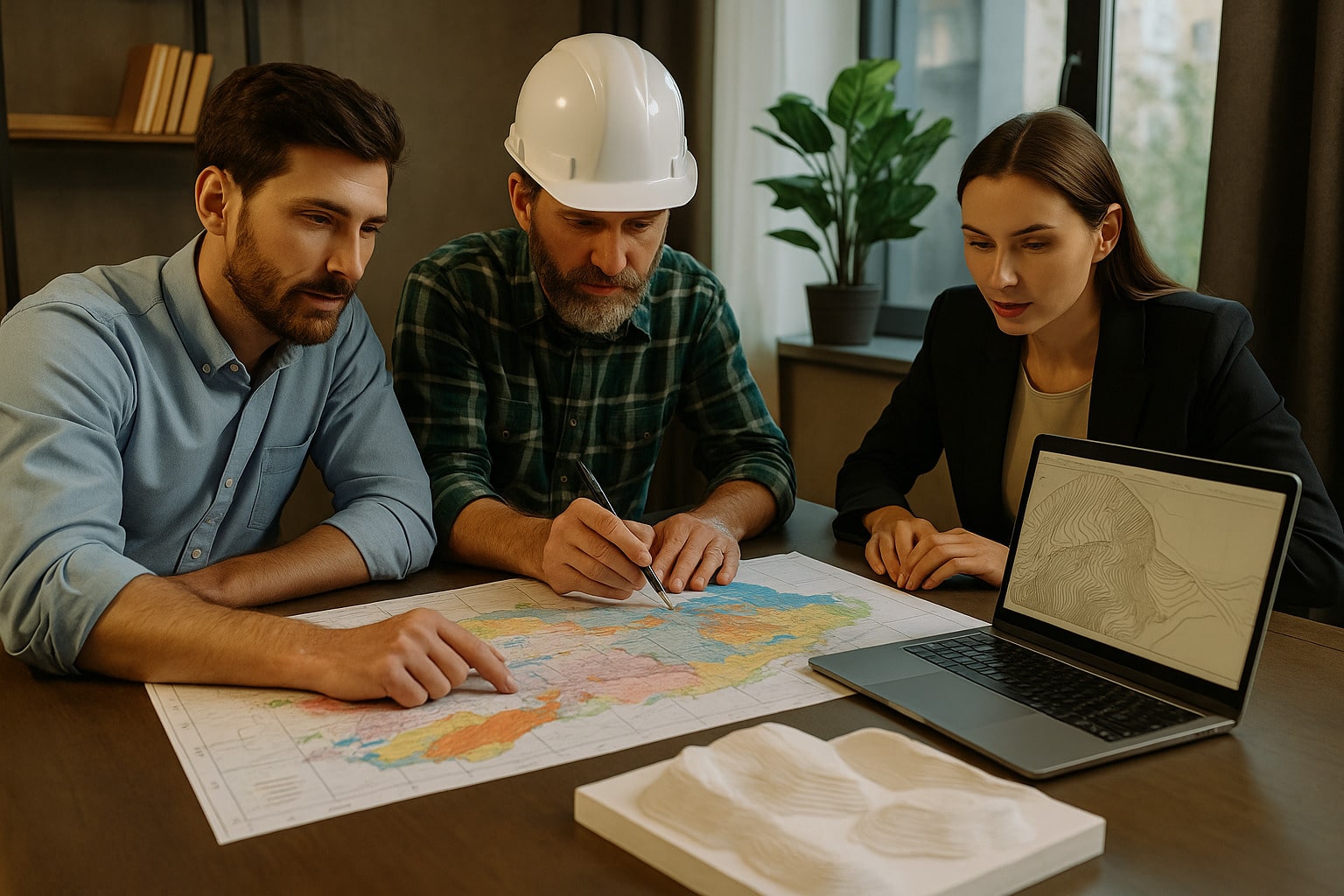
Before a raw materials project goes into operation, it must be clear whether the deposit is economically, technically and ecologically viable. The resource assessment therefore forms the centrepiece of every project development. It determines whether an area can be extracted in accordance with environmental regulations, safety standards and local development. For Ares Maximus, this is not a purely technical step, but a responsible process that combines foresight, data quality and clear standards.
From raw material potential to a reliable basis for decision-making
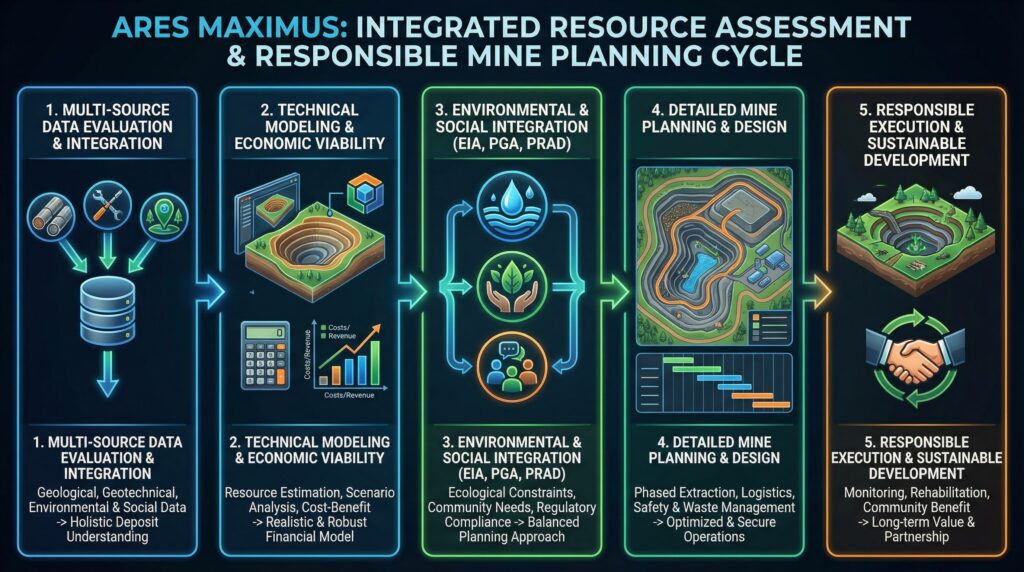
The first step is the systematic evaluation of all exploration data. The results from drill cores, sediment analyses, geophysical measurements and digital models are collated and evaluated. This overall view provides a realistic picture of the deposit: its size, structure, material quality, thicknesses, hydrogeological conditions and potential risks.
The central question is not only: Is the occurrence sufficient?
But also: Can it be developed safely and in an environmentally friendly way?
Ares Maximus attaches great importance to weighing up potential interventions against ecological resilience and regional requirements. Each assessment follows clear criteria and transparent methods.
Technical modelling and economic analysis
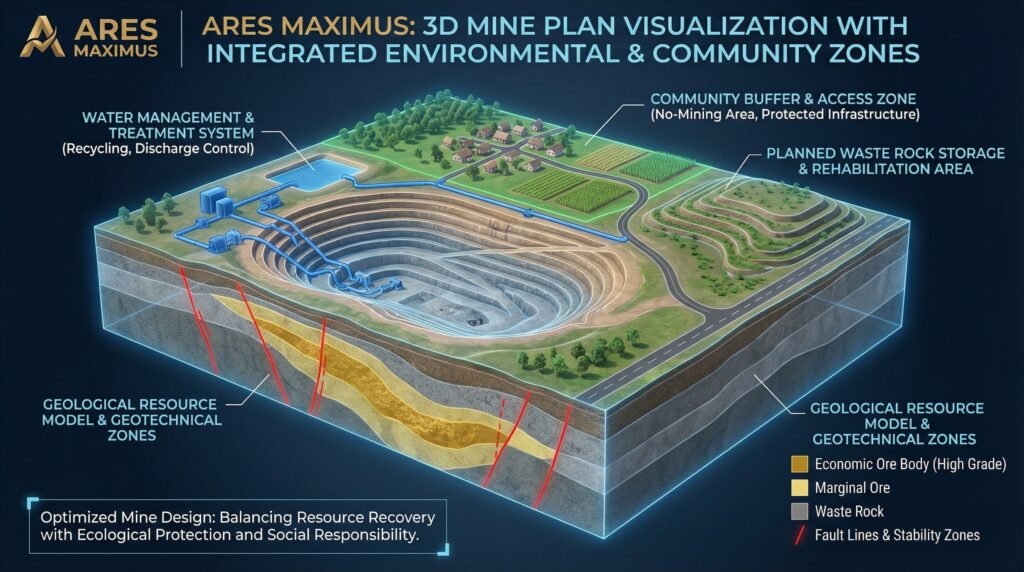
Modern 3D models make it possible to simulate various scenarios. They show how extraction volumes, extraction lines, infrastructure, water movements and material movements could behave. These models are at the centre of extraction planning and influence all subsequent decisions - from the choice of extraction method to the design of access roads and water control structures.
The economic side is also analysed in this phase:
- What production volumes are realistic?
- What are the operating costs?
- Where are there ecological restrictions?
- Which forms of extraction (alluvial, mechanised, selective) are suitable?
This type of assessment ensures that planning is not based on optimism, but on realistic data and conservative forecasts.
Environmental compatibility as an equal factor
In many mining projects, the environment is only considered at a late stage. At Ares Maximus, however, it begins at the planning stage - parallel to the technical and economic assessment. Data from environmental programmes such as EIA, PGA and PRAD flow directly into the mining planning.
This allows sensitive areas to be identified in advance:
- Water protection and runoff management
- Soil stability and erosion potential
- Vegetation and biodiversity zones
- Protection of traditional farmland and communal areas
Early ecological integration prevents critical areas from having to be corrected later - an approach that significantly reduces environmental impact.
Planning safe and orderly dismantling
Once the deposit model has been finalised and the environmental assessment has been integrated, the actual extraction planning begins. This includes
- the definition of the mining sections
- the definition of logistics routes
- the planning of material movement
- the positioning of sediment and water barriers
- the organisation of the security zones
- the creation of a seamless documentation and monitoring system
Waste management also plays a key role. The PGR guidelines ensure that material flows are controlled, waste is separated and recycled and all materials are disposed of correctly.
The dismantling plan is therefore not a mechanical process, but a complex safety, environmental and efficiency model.
Responsibility for the region and communities
A project is only sustainable if it also benefits local people. This is why the mining plans at Ares Maximus are always developed together with local authorities, community representatives and regional partners. The planning takes into account
- Access to communities
- Protection of local paths
- Employment opportunities
- Long-term land development
- Potential recultivation measures
The result is a reduction that not only makes technical sense, but is also socially accepted and harmonised as a partnership.
Conclusion
Resource assessment and extraction planning is the bridge between geological knowledge and responsible operation. It ensures that a project is economically viable, environmentally sound and socially responsible. Ares Maximus combines technical expertise with clear environmental standards - and thus creates a basis on which safe and sustainable raw materials projects can be developed.

